Prisoner of the Lord
Bishop Beau Barton
Courts of Praise · July 12, 2026
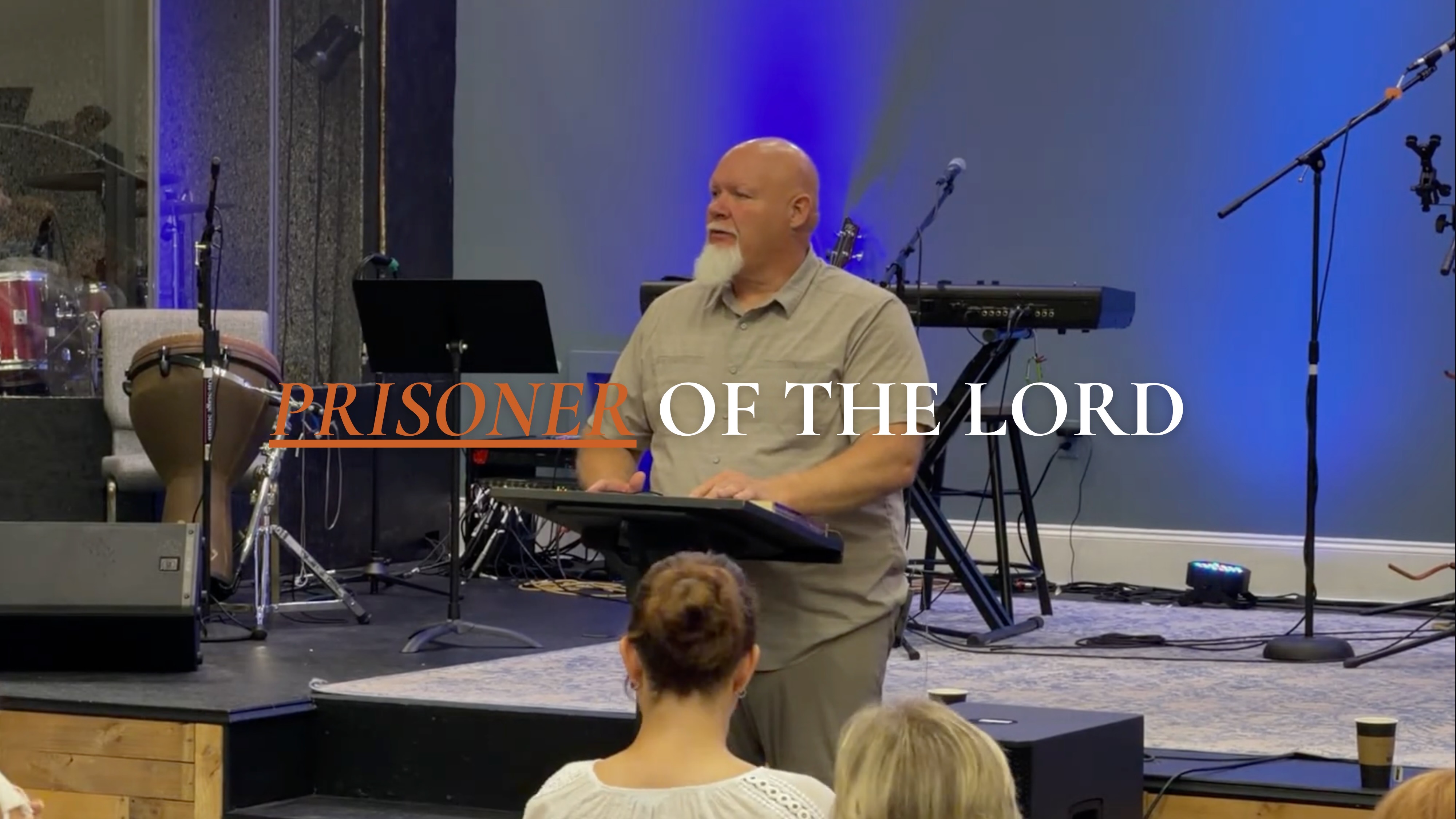
Something happens the moment obedience costs more than you expected. Maybe it’s a job. Maybe it’s a relationship. Maybe it’s just the space in your schedule you used to protect for yourself. And underneath the hurt, there’s a question waiting: who’s to blame for this? The honest answer determines whether the hard season becomes a prison of bitterness or a place where God gets the glory.
Bishop Beau Barton preached this message at Courts of Praise on July 12, 2026, walking through Ephesians 4 and 1 Peter 2 to make one central point: obedience to God is never measured by the bare minimum, and the suffering that sometimes follows obedience is not a sign that something has gone wrong.
“I am here because of obedience, and I will do it for the glory of the Lord.”
— Bishop Beau Barton
Everything Already Belongs to Him
“Knowing this: that the law is not made for a righteous person, but for the lawless and insubordinate, for the ungodly and for sinners, for the unholy and profane, for murderers of fathers and murderers of mothers, for manslayers,”
— 1 Timothy 1:9
We talk about tithes and offerings more than almost any other subject in the American church, and Bishop Beau named exactly why: the law was never written for people who’ve already surrendered everything. It was written for the lawbreaker. A tithe is a bare minimum God imposes on people who are still far from Him — not a ceiling for people who belong to Him.
Jesus didn’t tithe His way through thirty-three years of life. He gave everything He had, because everything He was belonged to His Father to do with as He pleased. That’s the example — not the smallest percentage a person can give and still be called faithful. If God has your heart, Bishop Beau said, your money, your time, your affections all follow. This isn’t a teaching about giving. It’s an honest look at where your heart actually sits with your surrender to Him.
Faithful in the Smallest Detail
“Elijah was a man with a nature like ours, and he prayed earnestly that it would not rain; and it did not rain on the land for three years and six months.”
— James 5:17
Bishop Beau recently found himself preaching in the biggest church in a Latin American country he’d never visited, at the invitation of a spiritual leader he’d never met. It’s the kind of door only God can open — and he’s clear that it produces zero personal ambition in him. What impressed him wasn’t the size of the platform. It was watching God do something no amount of organizing could produce.
That’s the same principle behind Elijah’s introduction in Scripture. There’s no backstory, no résumé — Elijah simply appears standing in front of a king. “If God can do that with a man with a nature like ours,” Bishop Beau said, “then He can also put me wherever He wants me to be.” Being rewarded richly from heaven has nothing to do with how big people think the assignment is. It has everything to do with being found faithful in the smallest detail — whether that’s in front of a king or in front of a clerk at Walmart.
Walk Worthy, Even When It Costs You
“I, therefore, the prisoner of the Lord, beseech you to walk worthy of the calling with which you were called.”
— Ephesians 4:1
Paul writes this from prison, and he doesn’t call himself a prisoner of Rome. He calls himself the prisoner of the Lord — a decision about how to interpret his own suffering, not a description of his captors. Paul didn’t do anything wrong except preach the gospel. That got him arrested. And he had a decision to make, the same decision anyone facing unjust hardship eventually has to make: place the blame on the Lord, place the blame on people, or understand that he was exactly where the Lord’s will had allowed him to be.
Bishop Beau named the real danger for a family or a church that’s fully pursuing God: it isn’t that the enemy stops you from obeying. It’s that he perverts what happens after you obey. “Nobody owes you except the Lord,” he said — because the moment you assign blame to someone else for what obedience cost you, you rob yourself of the strength God offers through simply yielding to His will.
Suffering That Carries God’s Approval
“For this is commendable, if because of conscience toward God one endures grief, suffering wrongfully. For what credit is it if, when you are beaten for your faults, you take it patiently? But when you do good and suffer, if you take it patiently, this is commendable before God.”
— 1 Peter 2:19–20
Peter draws a sharp line here. If you’re punished for something you actually did wrong and you take it patiently, that’s no credit to you — you earned the consequence. But if you do good and suffer for it anyway, and you take it patiently, that is commendable before God. The devil doesn’t get a vote in whether your suffering carries weight. Only the reason behind it, and the way you carry it, do.
“You don’t get to decide what your suffering is going to be, but you are responsible for how you respond to it when it comes.”
— Bishop Beau Barton, 1 Peter 2:20
Bishop Beau was blunt about this: you don’t get to decide what your suffering is going to be, but you are completely responsible for how you respond to it when it comes. Even Jesus, though a Son, learned obedience through what He suffered (Hebrews 5:8). If it wasn’t optional for Him, it was never going to be optional for us. The decision to let hardship be for God’s glory instead of for blame has to be made before the hardship ever arrives — not in the middle of it.
“Nobody owes you except the Lord.”
— Bishop Beau Barton
A Note for This Week
- Identify one place you’ve been giving God the bare minimum, and make it whole this week.
- Before the next hard season arrives, decide now how you’ll respond to it — write it down if that helps it stick.
- If you’re currently in a hard season because you did the right thing, name where you’ve been misplacing the blame, and hand it to God instead.